
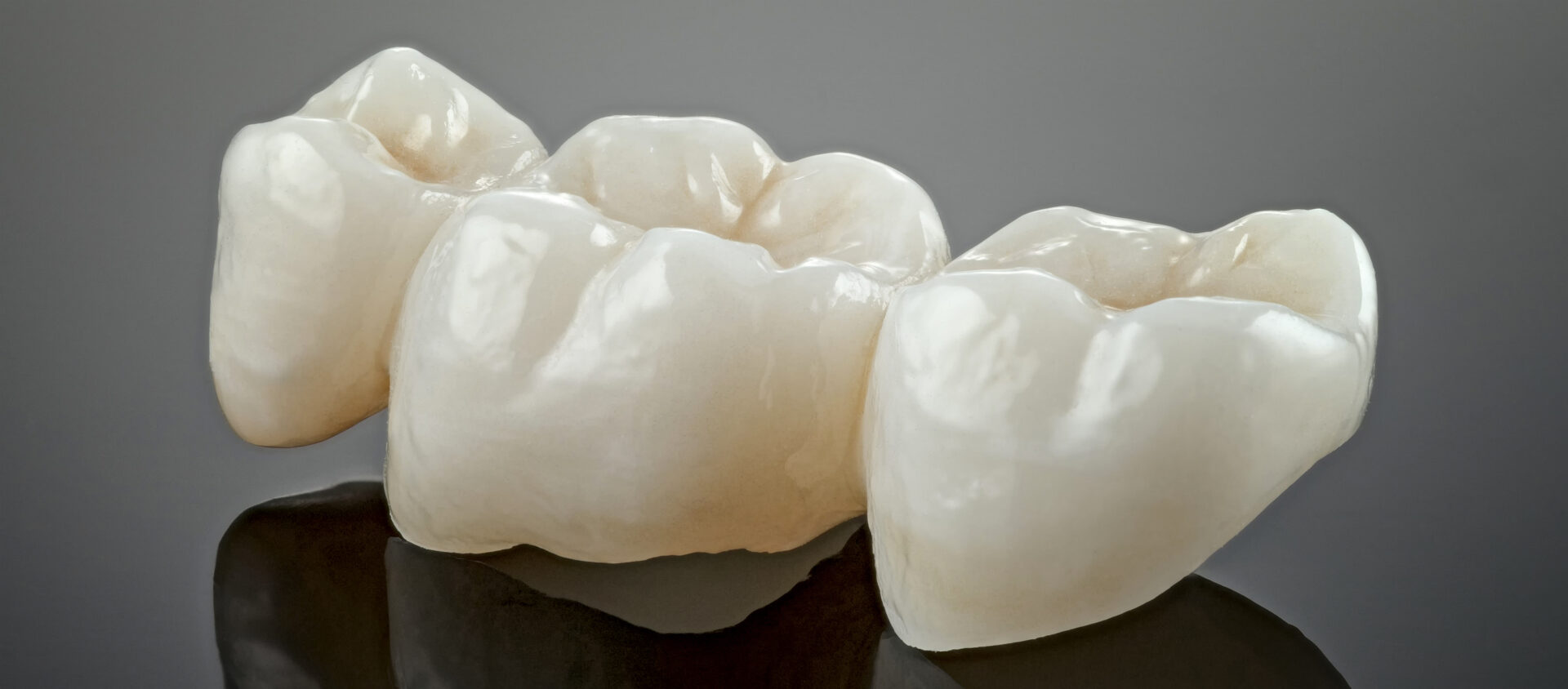
Dental crowns and bridges on the Gold Coast
A crown covers and protects a tooth that's cracked, badly broken or heavily filled. A bridge fills a gap by joining a false tooth to crowns on the teeth either side. Both are made to match your teeth and usually take two visits.
Or call
(07) 5526 0111Open Monday to Friday
When a crown or bridge may be recommended
- A tooth that's cracked or badly broken
- A large filling with little tooth left around it
- A back tooth after root canal treatment
- A tooth that's badly worn
- A gap where a tooth is missing
How a crown or bridge is made
Exam and planning
We check the tooth and take X-rays, then talk through materials and costs.
Preparing the tooth
With the area numbed, a thin layer of the tooth is reshaped to make room for the crown.
Scan or impression
We take a digital scan or impression for the dental laboratory that makes your crown or bridge. A temporary crown protects the tooth in the meantime.
Fitting
One to two weeks later, we check the fit, colour and bite, then cement it in place.
Good to know
Materials
Crowns can be ceramic, zirconia, porcelain over a metal base, or gold. Ceramic and zirconia can be matched to the colour of your teeth. Your dentist will explain which suits the tooth.
Cleaning under a bridge
Floss can't pass between the joined teeth of a bridge, so you'll need a floss threader, superfloss or interdental brushes to clean underneath. We'll show you how.
The tooth underneath can still decay
A crown can't decay, but the tooth under it can, so keep brushing along the gumline and come for check-ups.
Some sensitivity is normal
A prepared tooth can be sensitive to hot and cold for a few days. This usually settles on its own.
What can go wrong
- A crown can come loose, chip or crack.
- Decay can start where the edge of a crown meets the tooth.
- Preparing a tooth can occasionally inflame the nerve, which may then need root canal treatment.
- Bridges most often fail because of decay in the supporting teeth or because the cement breaks down.
Looking after a crown or bridge
- Go easy on a temporary crown: avoid sticky or very hard food on that side.
- Once the permanent crown is in, brush and floss as normal.
- Keep up regular check-ups so the edges can be checked.
Call us if
- A crown or temporary crown comes off. Keep it and don't glue it back yourself
- Your bite feels high or uneven
- The tooth aches or stays sensitive for more than a couple of weeks
After hours, call 13 HEALTH on 13 43 25 84, or 000 if you have trouble breathing or swallowing.
What it costs
- [Total]
Bridge replacing one tooth: two crowns and one false tooth
Items 613, 613, 643
Individual items
- 613[Fee]
Ceramic or zirconia crown
Full crown, non-metallic, indirect
- 615[Fee]
Porcelain crown on a metal base
Full crown, veneered, indirect
- 618[Fee]
Gold or metal crown
Full crown, metallic, indirect
- 643[Fee]
Bridge, each replacement tooth
Bridge pontic, indirect, per pontic
Fees last reviewed [Fee review date]
Crown fees depend on the material. A bridge is billed as a crown for each supporting tooth plus a fee for each false tooth.
We accept all private health funds and claim on the spot with HICAPS.
All fees and health fundsQuestions about crowns and bridges
How long does a crown take?
Usually two visits, one to two weeks apart: one to prepare the tooth and take a scan or impression, one to fit the crown.
Does getting a crown hurt?
The tooth is numbed while it's prepared, so you'll usually feel pressure rather than pain. Some sensitivity for a few days afterwards is normal.
How long will a crown last?
It depends on the material, the tooth, your bite and how you look after it. Grinding your teeth shortens a crown's life. Your dentist can tell you what to expect for your tooth.
What if my crown comes loose?
Keep it somewhere safe and call us. Don't glue it back yourself. We'll check whether it can be cemented back on or needs replacing.
What are the alternatives to a crown?
Depending on the tooth: rebuilding it with filling material, an onlay, a veneer for a front tooth, or removing the tooth and replacing it. Your dentist will go through the pros and cons with you.
Will my health fund cover it?
Crowns and bridges usually fall under major dental in extras cover, which can have longer waiting periods. Give your fund the item numbers from your quote.
Further reading
Clinical content reviewed by [Clinical reviewer and registration number] on [Review date].
Crowns and bridges at The Dental Studio
Who provides it here

[Days]

[Days]

[Days]
What we use
We use [Dental laboratory and crown materials].
Referred elsewhere
[What we refer out, if anything]
Partial dentures are fitted here and made for us by an external dental laboratory.
Or call
(07) 5526 0111Open Monday to Friday
After hours, call 13 HEALTH on 13 43 25 84, or 000 if you have trouble breathing or swallowing.